The playbooks from 2021 and 2022 aren’t coming back.
Money was cheap. Growth at all costs made sense. You could throw budget at paid ads, hire fast, and figure out efficiency later.
That’s over. Funding is tighter. Investors want profitability. Buyers are harder to reach. And AI has changed how people find information in ways most marketers haven’t caught up with yet.
The SaaS companies growing efficiently right now are doing things differently. Here are seven ideas worth exploring.
1. Get Your Messaging Right First
Everyone claims to be “AI-powered” and “revolutionary.” Nobody believes it anymore.
Before you spend more on campaigns, find your “only.” What can you truthfully claim that nobody else can? Maybe you’re the only platform serving a specific vertical. Maybe your approach to implementation is genuinely different. Maybe you’ve got 15 years of data nobody else has access to.
If you can’t complete the sentence “We’re the only ones who…” you have a positioning problem. And no amount of marketing spend fixes a positioning problem. It just makes you more visible while saying nothing distinctive.
Get this right first. Everything else becomes easier.
2. Optimise for Answer Engines, Not Just Search Engines
Organic traffic from traditional SEO dropped 20-40% across industries in 2025. People are still searching on Google, but increasingly they’re also asking ChatGPT, Claude, Gemini and Perplexity direct questions: “What’s the best project management tool for agencies under 50 people?” “Does this integrate with Xero?”
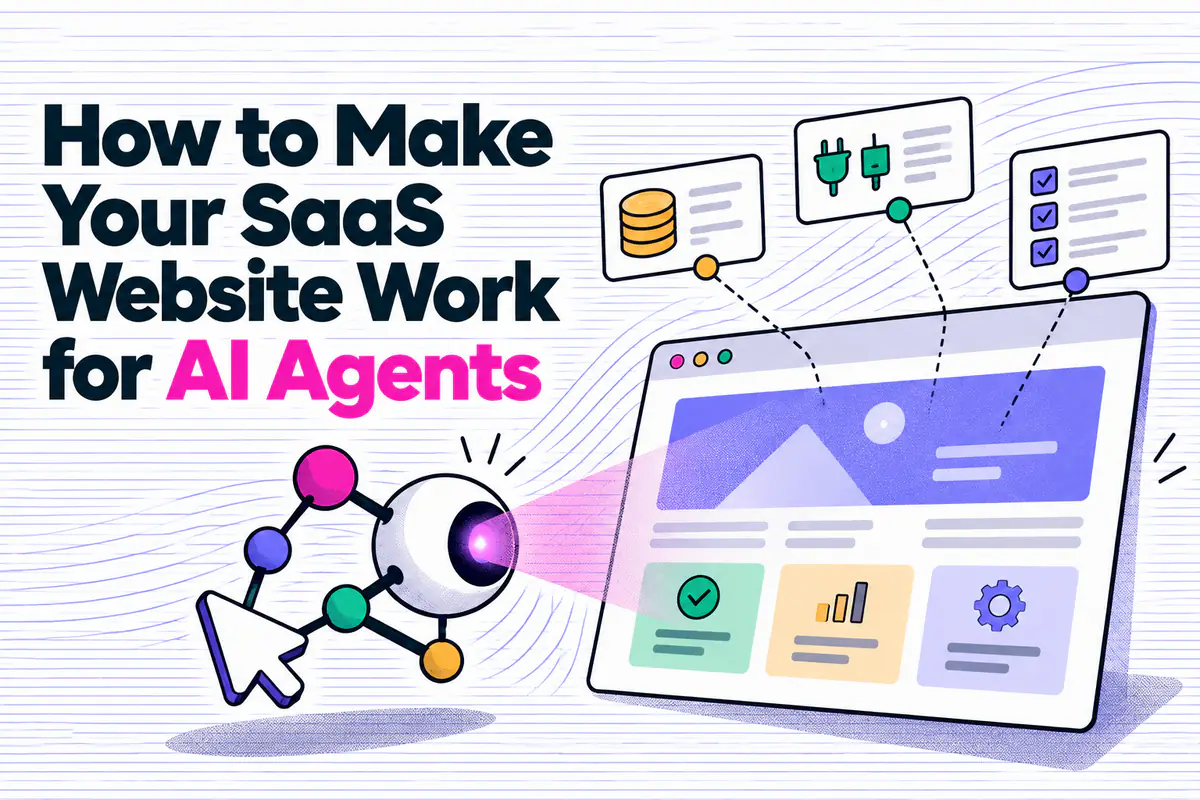
If you’re not showing up in those AI-generated answers, you’ve got a problem.
This is Answer Engine Optimisation. Here’s where to start:
- Map every question your prospects ask during research
- Create dedicated pages that answer each one clearly in the first paragraph
- Build authority in places AI tools index heavily (Reddit is a big one)
- Document your pricing, features, and integrations in plain language
- Monitor what AI tools are saying about you and your competitors
We’re early in this shift. The companies that move now will have advantages that compound.
3. Shift From Lead Capture to Demand Generation
At any given moment, roughly 5% of your potential market is actively looking for a solution like yours. Traditional lead generation is designed to capture that 5%.
Which means you and every competitor are fighting for the same tiny slice.
Demand generation flips this. Instead of fighting over the 5% who are ready now, you build relationships with the 95% who aren’t - so when they eventually enter the market, you’re the obvious choice.
This means creating genuine value for people who might not buy for months or years. Research they’ll reference. Tools they’ll bookmark. Content that helps them do their job better. When someone in that 95% finally gets budget or their current vendor fails them, you want to be the name that comes to mind first.
The maths works out. It just requires patience.
4. Build Personal Brands (They Beat Corporate Ones)
Trust in polished corporate messaging is at historic lows. Trust in individual voices - founders, practitioners, people with names and faces - remains high.
This isn’t about becoming a LinkedIn influencer. It’s about recognising that your company’s most authentic marketing channel might be the people who work there.
Founders sharing the real decisions they’re wrestling with. Product people explaining why they built something a certain way. Customer success sharing patterns they’re seeing. Real humans, being genuinely useful, building trust that corporate accounts never will.
The founders who do this well aren’t polished. They’re consistent. They share what they’re actually thinking about, engage with their industry, and show up regularly.
Related reading: Founder-Led Marketing That Drives Pipeline: 90 Minutes a Week
5. Use AI Strategically
Most SaaS companies using AI for marketing are using it badly. They’re generating mediocre content faster, which just means more mediocre content exists. A good SaaS marketing agency will use AI to think better, not just produce more.
The real opportunity is using AI to think better, not just produce more. That means:
- Strategy and planning - using AI to pressure-test positioning, analyse competitors, and identify gaps in your go-to-market
- Buyer personas and research - building detailed, dynamic personas based on real data rather than assumptions
- Building AI agents - creating systems that handle repetitive marketing tasks so your team focuses on higher-value work
- Workflow automation - connecting tools and processes so work flows without manual intervention
- Content multiplication - turning one solid piece of thinking into twenty assets across formats and channels
The tactical stuff matters too - repurposing content, personalising outreach, monitoring conversations. But start with the strategic layer. That’s where the real leverage is.
6. Turn Your Data Into Content Nobody Else Can Create
Here’s what AI can’t replicate: the data sitting in your platform.
Your SaaS product sees patterns nobody else can see. Usage trends. Industry benchmarks. Behavioural data. The kind of insights that make people stop scrolling because they can’t get this information anywhere else.
A recruitment platform knows which skills are actually getting hired (not just posted). A finance tool knows how payment terms are shifting. An HR platform spots which benefits actually reduce turnover.
Anonymise it. Analyse it. Publish it. Become the definitive source of insight in your space.
This is harder than writing another “10 tips” post. That’s exactly why it works. Your competitors can copy your messaging. They can’t copy your data.
7. Make Existing Customers Your Growth Engine
In a tighter funding environment, net revenue retention matters as much as new logos.
If you retain 100% of customers and expand them by just 20% annually, you’re growing 20% before signing a single new deal. That’s efficient growth that doesn’t require burning cash on acquisition.
This means getting serious about expansion: identifying upsell opportunities, driving adoption of features customers aren’t using yet, making it easy for happy customers to refer others. The companies growing efficiently aren’t just acquiring customers. They’re compounding value from the ones they already have.
Go Deeper
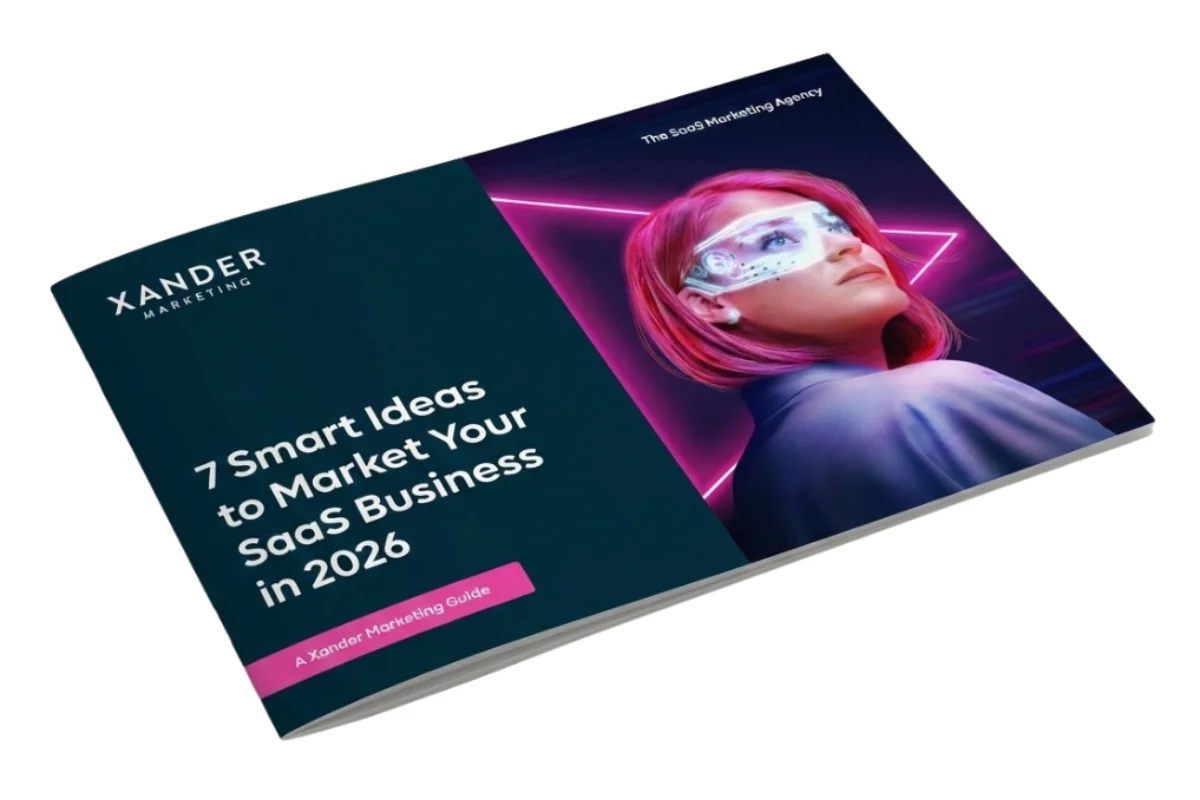
We explore all seven of these ideas in much more detail - with practical frameworks and implementation steps - in our free ebook. Download 7 Smart Ideas to Market Your SaaS Business in 2026.
Xander Marketing is a B2B SaaS marketing agency. We’ve been doing this for 16 years across 250+ SaaS companies. Book a free 30-minute consultation to talk through your marketing and see if we’re the right fit.