Most SaaS marketing is a fight over scraps.
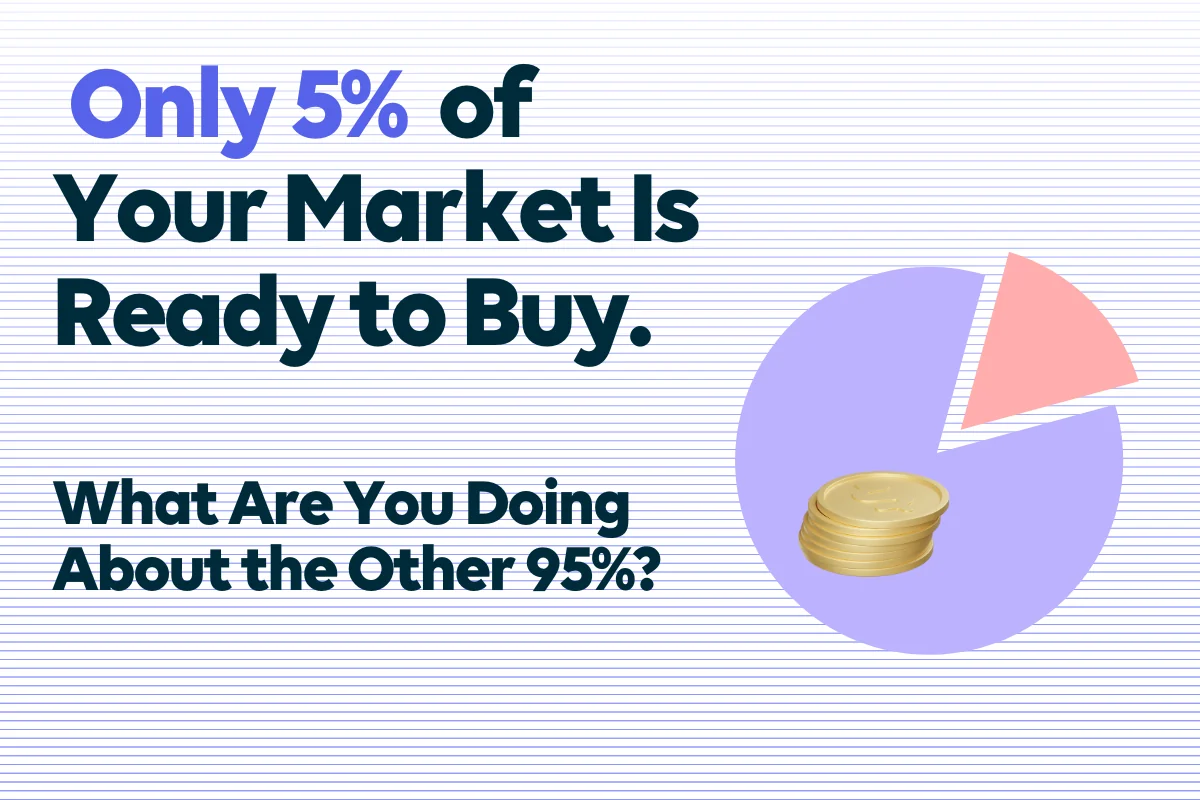
At any given moment, roughly 5% of your potential market is actively looking for a solution like yours. They’ve got budget. They’ve got a problem that’s painful enough to fix. They’re comparing options.
Traditional lead generation - the gated ebooks, the “book a demo” ads, the intent data platforms - is designed to capture that 5%.
Which means you and every competitor are bidding on the same keywords, fighting for the same tiny slice of the market, and paying increasingly ridiculous costs per click to do it.
The 95% aren’t ignoring you because your ads are bad. They’re ignoring you because they’re not in the market yet. They don’t have budget this quarter. The problem isn’t painful enough. They’re stuck in a contract. Their boss hasn’t told them to fix it yet.
That 95% will eventually become the 5%. People change jobs. Budgets get approved. Contracts expire. Problems get worse.
The question is: when they enter the market, will they already know who you are?
Lead Generation vs Demand Generation
Lead generation asks: “How do we capture the people who are ready to buy right now?”
Demand generation asks: “How do we build relationships with people so that when they’re ready to buy, we’re the obvious choice?”
Lead generation is competitive. You’re fighting for attention at the exact moment when everyone else is fighting for it too.
Demand generation is compounding. You’re building awareness, trust, and preference over time - so that by the time someone’s ready to buy, there’s no competition. They already know you. They already trust you. You’re the name that comes to mind.
This isn’t about ignoring the 5%. You still need to capture demand that exists today. But if that’s all you’re doing, you’re leaving the bigger opportunity on the table.
Why This Shift Matters Now
Three things have changed:
Buyers do their own research. By the time someone talks to your sales team, they’ve already done most of their evaluation. They’ve read reviews, asked peers, consumed content. If you’re not part of that research phase, you’re not on the shortlist.
Attention is harder to earn. Everyone’s inbox is full. Everyone’s LinkedIn feed is noise. The bar for getting noticed keeps rising. Being helpful and valuable before someone needs you is one of the few ways to cut through.
Efficient growth matters more than growth at all costs. When money was cheap, you could buy your way to pipeline. Now investors want to see that your marketing compounds - that you’re building an asset, not just renting attention.
What Demand Generation Actually Looks Like
Demand generation isn’t a tactic. It’s a shift in how you think about marketing.
Instead of gating everything and optimising for leads, you’re optimising for reach and resonance. You’re trying to be useful to as many potential future buyers as possible.
This looks like:
Ungated content. Ebooks, guides, research, and tools that people can access without giving you their email. Yes, you’ll capture fewer leads. But the people who do reach out will be warmer, more qualified, and further along in their thinking.
Building in public. Sharing what you’re learning, the decisions you’re making, the challenges you’re facing. Not polished corporate content - real insight from real people at your company. Related reading: Building a SaaS Product in Public: Strategies for Long-Term Success
Being where your buyers are. Not just running ads, but genuinely participating in the communities, podcasts, newsletters, and conversations where your future customers spend time.
Creating content that helps, not just sells. Content that makes someone better at their job, whether they buy from you or not. The kind of thing people bookmark, share with colleagues, and remember.
Consistency over campaigns. Demand generation isn’t a burst of activity. It’s showing up regularly, week after week, month after month, until you become a familiar and trusted name in your space.
Demand Generation Requires Patience
You’re investing in people who won’t buy this quarter. Maybe not next quarter either. The payoff is months or years away.
That’s uncomfortable when you’re watching pipeline, reporting to a board, or trying to hit targets. It’s much easier to spend on ads that generate leads you can count this week.
But here’s the maths that makes it worth it:
When someone enters the market already knowing and trusting you, your conversion rates are higher. Your sales cycles are shorter. Your cost of acquisition drops. You’re not competing on features and price - you’re competing on relationship and trust.
The companies that commit to demand generation build a compounding advantage. The longer they do it, the wider the gap between them and competitors who are still fighting over the same 5%.
Start With What You Have
You don’t need to overhaul your entire marketing strategy overnight.
Start by asking: what percentage of our marketing is focused on capturing existing demand vs creating future demand? For most SaaS companies, it’s heavily weighted toward capture.
Then look for easy shifts:
- Ungate one piece of content that’s currently behind a form
- Have a founder or team member start posting regularly on LinkedIn
- Create one genuinely useful resource - a template, calculator, or guide - and promote it without requiring an email
- Identify one community, podcast, or newsletter where your buyers spend time and figure out how to add value there
You don’t need to stop lead generation. But if you’re only doing lead generation, you’re competing for 5% of your market while ignoring the other 95%.
That’s a fight you don’t have to keep having.
We explore demand generation and six other ideas reshaping SaaS marketing in our free ebook. Download 7 Smart Ideas to Market Your SaaS Business in 2026.
Xander Marketing is a B2B SaaS marketing agency. We’ve been doing this for 16 years across 250+ SaaS companies. Book a free 30-minute consultation to talk through your marketing and see if we’re the right fit.