Key takeaways
- Start with your objective, ideal customers and reasons to choose your product. Use those decisions to guide your messaging and channel choices.
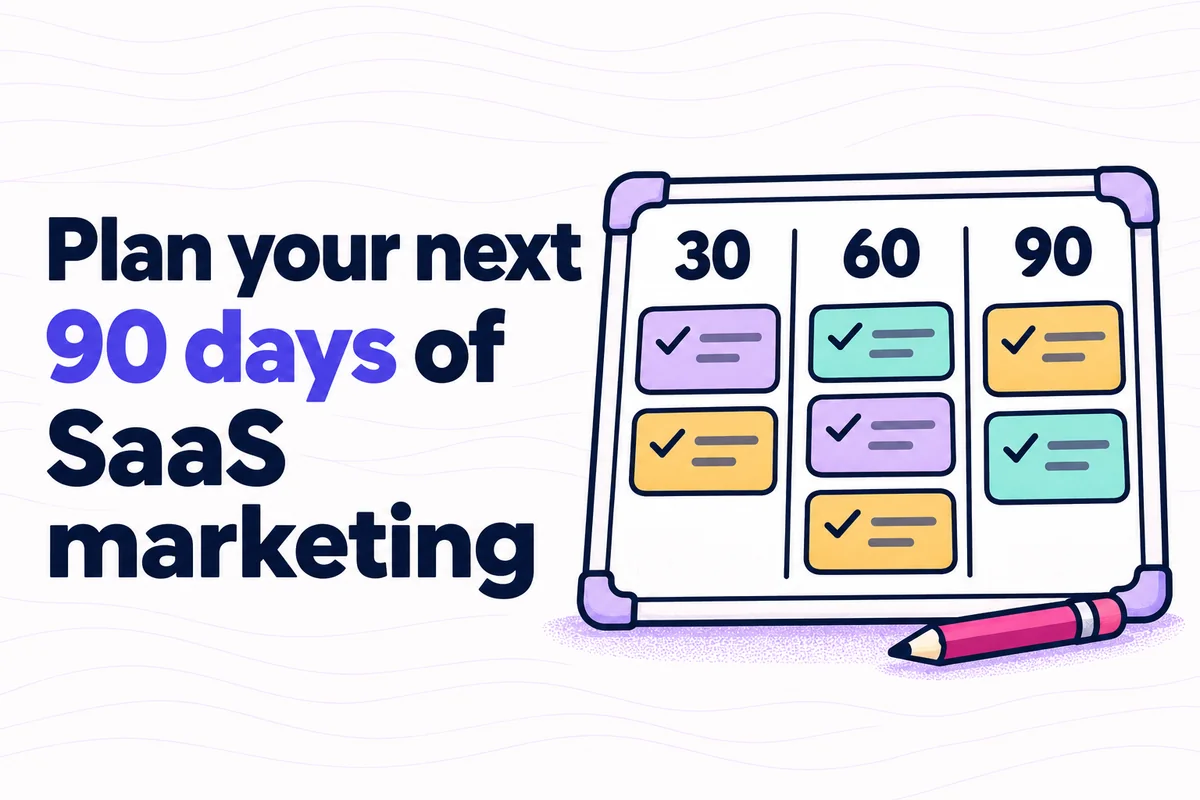
- Build a 90-day action plan with clear priorities, owners, costs and team hours. Check the work fits your resources and agree when you'll review progress.
- Our free SaaS marketing planner brings your answers together into a downloadable plan. No email address is required, and you can save a backup to return to later.
Where should you focus your SaaS marketing over the next three months?
You might have a website that needs work, a list of content ideas, a paid campaign to review and someone suggesting you should do more on LinkedIn. If you’re a founder managing marketing alongside everything else, or a small team with limited time, deciding what gets done first can be difficult.
We’ve developed a free SaaS marketing strategy planner to help you work through those decisions. It takes you from the customers you want to reach through to the activities, budget and responsibilities for your next 90 days.
You can use it directly on our website, without providing an email address, and download your plan when you’re ready.
Start with what you want marketing to achieve
It’s tempting to begin with channels. Should we invest in SEO? Run Google Ads? Post more often?
The answer depends on what you’re trying to achieve and who you need to reach. A business looking for its first customers has different priorities from one with plenty of trials but very few people converting to paid accounts.
The planner starts with your objective, where you are now and what success would look like in 90 days. For example, you might want to increase qualified demos from eight to twelve a month. That gives you something specific to plan around and a measure to review afterwards.
You’ll also record the money and team time available. Being clear about both makes it easier to choose work you can actually carry out.
Get specific about your customers and competitors
“Small businesses” or “anyone who needs project management software” leaves a lot open to interpretation.
Which types of company get the most value from your product? Who uses it, who recommends it and who approves the purchase? What has happened in their business that makes finding a solution a priority now?
The planner helps you describe your ideal customer profile and the people involved in buying. It also asks which customers you’ll leave out of this particular plan. A small team needs to be selective about where it spends its time.
Then consider what those customers use today. That might be a direct competitor, but it could also be a spreadsheet, a manual process or simply putting up with the problem. Understanding why someone keeps their current approach helps you explain why changing is worthwhile.
Give people a reason to choose you
Once you’ve thought about the customer and the alternatives, you can work on your positioning and message.
The questions cover what your product helps people achieve, what makes it a better fit for your chosen customer and what evidence supports that claim. From there, you’ll draft a headline, supporting copy and a clear next step for the buyer.
Keep the language close to the problem you solve. If your customer spends Friday afternoon reconciling figures from three systems, explain how you help with that. A broad promise about transforming their business gives them less to go on.
There are examples in the fields to help you get started. Use your own customer conversations, sales feedback and product knowledge to make the answers relevant to your business.
Choose channels you have the resources to support
For each channel, the planner asks why it will reach your target customer, what you’ll do and how you’ll measure it.
That makes “LinkedIn” a more useful discussion. Who will post? What can they say that your buyers will find helpful? What should someone do after reading? Who will follow up an enquiry?
You can include up to eight channels, although you may only need two or three. The number you can maintain consistently matters more than the number you can list. There is also space to record what you’ll stop or defer.
Put names, dates and budgets against the work
The 90-day action plan brings your choices together. For each priority, you can set out:
- What will happen in the first 30 days, days 31–60 and days 61–90.
- Who is responsible for the work.
- The external cost and team hours needed.
- How you’ll judge progress.
The planner totals your allocated costs and time so you can compare them with what you have available. If the activities require more hours than your team can give them, you can adjust the plan before committing to it.
You’ll also choose a review date and record the assumptions you need to check. If you’re unsure which message will resonate, for example, talking to customers could be an early task. You can come back and update the plan as you learn.
Download it and use it with your team
At the end, you’ll have a strategy summary, your 90-day actions and the fuller notes behind your decisions. Download the plan, save it as a PDF through the print option or export the text to edit elsewhere. You can also print a blank worksheet if you’d prefer to work on paper.
Your answers save in the browser on the device you’re using and aren’t sent to Xander Marketing. Download a backup if you want to move to another device or keep a separate copy; clearing your browser data will remove the saved draft.
Before you start the work, go through the plan with everyone involved. Agree the first actions, check that the owners have time to do them and put the review date in the diary.
Start your SaaS marketing plan.
Need help deciding where to focus?
If you’re unsure about your positioning, which channels to prioritise or how much your team can take on, we can help. Our SaaS marketing strategy service covers developing the strategy and planning the work needed to deliver it.
Book a free consultation to talk through where you are, what you want to achieve and where you need support.