Key takeaways
- Xander Marketing has published its annual Smart Ideas guide for more than a decade, focusing each edition on the changes that matter most to SaaS marketers.
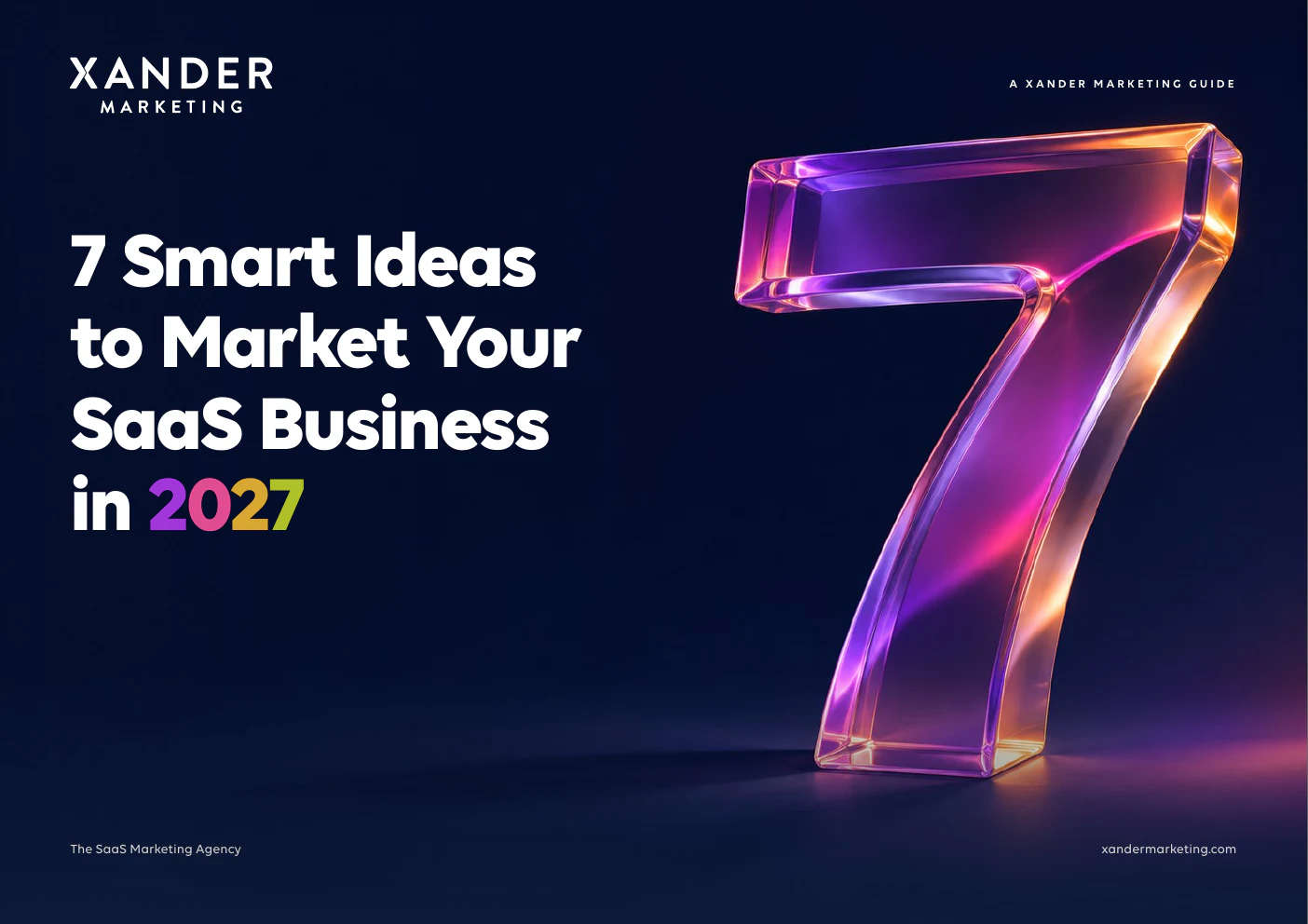
- The 2027 guide looks across the whole marketing picture, from positioning and discoverability to content, demand, team performance and partnerships.
- The seven ideas are designed to help you decide where to focus, rather than give your team another long list of tactics to complete.
For more than a decade, we have published an annual guide to the ideas we believe SaaS marketers should be thinking about next. Each edition reflects what is changing in the market, what we are seeing across the SaaS businesses we work with and the practical opportunities worth acting on.
Marketing has changed enormously over that time. New channels have emerged, buyer journeys have become less predictable and AI is changing how people discover, compare and interact with software. Marketing teams also have more tools and more data, alongside growing pressure to show how their work contributes to growth.
Strong SaaS marketing still starts with a clear message, a deep understanding of the customer and a compelling reason to be chosen. Those foundations then need to reflect the way buyers behave now.
The 2027 guide brings both sides together. It covers developments such as AEO, AI agents and AI-enabled marketing teams, alongside content, demand generation, positioning and partner marketing. Together, the seven ideas offer a rounded view of where SaaS marketing is heading and where your next improvement could come from.
Here are the seven ideas and where you can start with each one.
1. Put your message before your marketing activity
Before commissioning a new website, launching another campaign or asking AI to produce a batch of content, get clear on your message.
Many SaaS websites still make the buyer do too much work. They describe platforms, capabilities and technology without clearly answering three basic questions:
- What do you help customers achieve?
- Who benefits most?
- Why should they choose you?
The answer cannot be “because we use AI”. AI is increasingly part of the product landscape, not a position in its own right. Buyers need to understand the useful outcome, the situations where your product offers the greatest value and the evidence that supports your strongest claims.
Start with recent wins, lost deals and stalled opportunities. Look for the capabilities that mattered in the decision, the hesitation that had to be overcome and the language customers use themselves. Then turn that insight into a practical messaging framework your website, campaigns, sales conversations and onboarding can share.
Good SaaS positioning and messaging makes every channel that follows work harder.
2. Become an answer AI can give confidently
Answer Engine Optimisation is the work of improving whether and how your business appears when buyers use AI to research a problem, category or shortlist.
The most useful starting point is not a new piece of software. It is a list of real questions prospects ask:
- Which products suit a business of our size?
- What will this cost for our team?
- Does it integrate with the systems we already use?
- How does it compare with the alternative we know?
Test those questions across the AI tools relevant to your buyers. Record whether your product appears, how it is described, which competitors are recommended and which sources support the answer.
Then improve the sources. Clearly explain your product, plans, pricing approach, integrations, use cases and implementation requirements. Keep the profiles and listings you control accurate. Publish customer evidence and specialist insight that gives other credible sites a reason to reference you.
The goal is not a vague promise to “rank in AI”. It is to make accurate, useful information about your product easier to retrieve, understand and cite. Our AEO service helps SaaS companies find and fix the gaps.
3. Prepare for the buyer’s AI agent
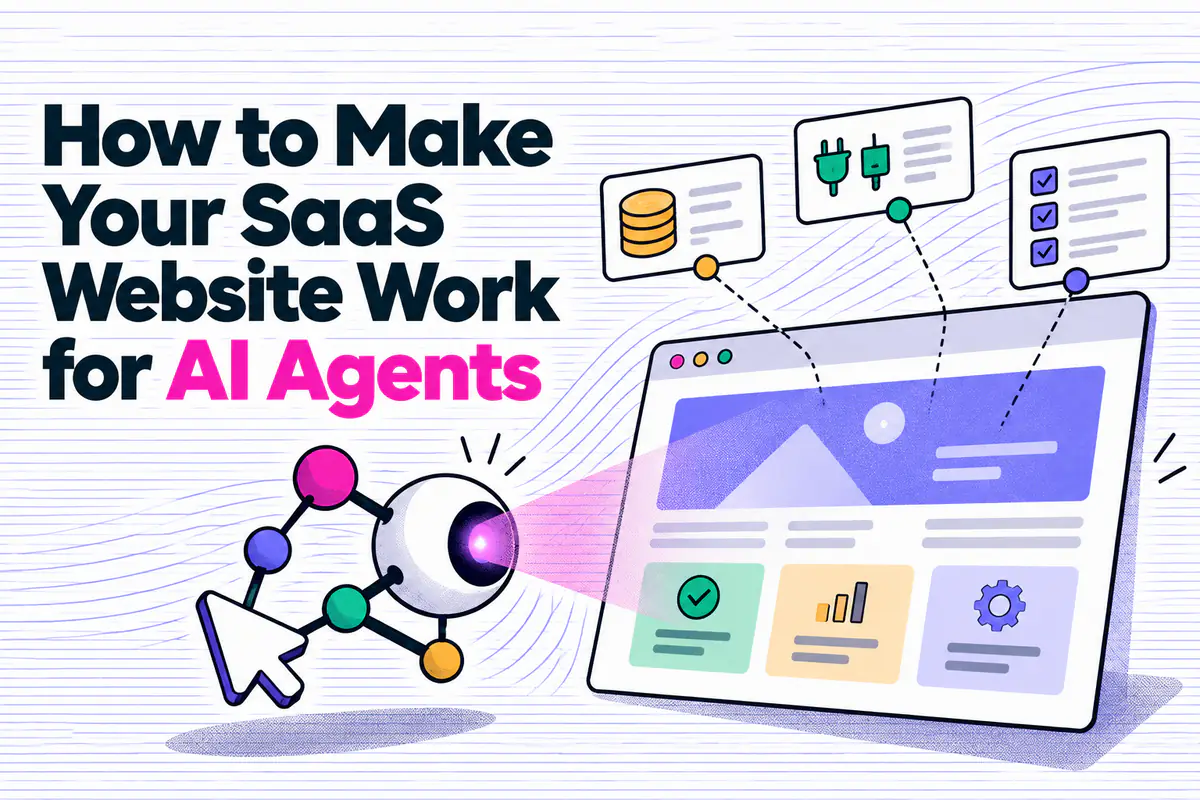
AI-assisted research is only the beginning. More buyers will give assistants a complete task: find suitable products, compare options, investigate plans and help them get started.
That creates a different test for your marketing and product experience. Can an assistant:
- Understand who your product is for?
- Find the right plan and price?
- Confirm whether you meet an important requirement?
- Start a trial or request the right next step?
- Complete a useful first task without getting stuck?
Run the journey using the kind of brief a real customer would give. Watch what the assistant can complete, where it needs help and what information it cannot find. Check buttons, forms, account setup and verification as well as the words on the page.
This is not about removing people from every purchase. Larger deals will still involve procurement, security checks, approvals and conversations. It is about making sure an assistant can bring the right information and options back to the person responsible for the decision.
4. Create content worth reading and using
When almost anyone can generate a competent article in seconds, competence is not enough.
Your prospects have little reason to read another piece that repeats what they already know. Useful content needs to offer something harder to reproduce: first-hand experience, original research, a practical tool, a detailed customer story, a strong point of view or specialist judgement.
Before publishing, ask:
- What will the reader know or be able to do afterwards?
- What have we added that another company could not?
- Does this help someone make a real decision?
- Would we still publish it if there were no keyword attached?
AI can help with research, structure, repurposing and production. The expertise must still come from people who understand the subject and take responsibility for the result. That is why every final item in our content marketing work is reviewed and edited by a human.
5. Build demand before the buyer starts looking
Many SaaS companies concentrate their budget on the small group of buyers already searching for a solution. That matters, but it leaves everyone else untouched until competitors are already in the conversation.
Demand generation helps the right market understand the problem, recognise your point of view and become familiar with your brand before an active purchase begins.
This does not require being everywhere. Choose the subjects you want to own and the channels your buyers genuinely use. Show up consistently with useful ideas, customer evidence and a recognisable message. Give people a reason to remember you even when they are not ready for a demo.
When the buying window opens, familiarity reduces the distance between “we have a problem” and “we should talk to them”. It also increases the chance that a buyer names your product when asking an AI assistant or colleague where to start.
6. Build an AI-enabled marketing team, not an AI content factory
The most valuable use of AI is not flooding every channel with more material. It is helping a capable team do better work more efficiently.
Look at the whole marketing system. AI can help summarise customer research, find patterns in sales calls, develop campaign variants, repurpose expert input, analyse results and handle repeatable production tasks. People should remain responsible for the audience, strategy, judgement, originality and final quality.
A useful test is whether the system improves one of four things:
- Speed: does it reduce time spent on low-value work?
- Quality: does it help the team find or apply better insight?
- Consistency: does it make good practice easier to repeat?
- Learning: does it help you understand what worked and what to change?
If the answer is only “it lets us publish more”, the system probably needs another look.
7. Make partnerships part of how you go to market
The right partnerships make your product part of the systems, advice and communities customers already rely on.
For one SaaS company, that may mean integration partners. For another, it could be consultants, accountants, associations, marketplaces, resellers or complementary software providers. The strongest opportunity depends on how customers buy and what they need around your product to succeed.
Start with the customer journey rather than a list of logos you would like on a partner page. Ask which organisations influence the decision, which tools sit alongside yours and where a joined-up offer would create more value.
Then make the commercial logic clear. Define the audience, the value for each partner, what you will do together and how opportunities will be managed. A partner programme needs ownership, enablement and useful joint activity if it is going to become a dependable route to market.
Our SaaS partner marketing service covers the strategy, programme development and campaigns needed to make that happen.
What should you do first?
You do not need to tackle all seven ideas at once.
Choose the one that addresses the biggest constraint in your marketing now. If prospects struggle to understand the value, start with the message. If AI gives incomplete answers, test the sources it uses. If your pipeline depends entirely on people already searching, invest in demand. If you have a strong ecosystem but no repeatable partner activity, build the programme.
The important step is to turn the idea into a clear piece of work with an owner, a useful measure and a point when you will review what changed.
Download the full 2027 guide
The ebook includes all seven ideas with practical questions, examples and actions you can apply to your own SaaS business.
If you would like help deciding where to focus or putting the ideas into practice, book a free 30-minute consultation.